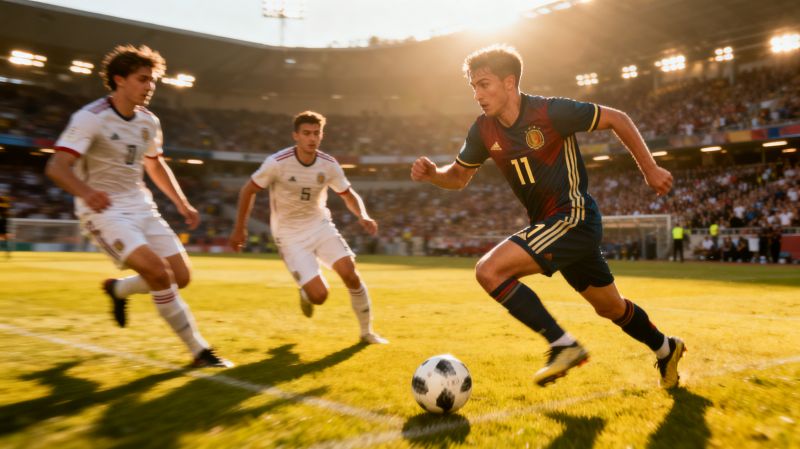
When the 11th forward takes the field, something shifts. I first noticed it during a pre-season friendly last July—a lanky teenager。number 11 on his back, drifting between the lines with an ease that belied his age. He wasn't the fastest or the strongest, but every time he received the ball, the tempo changed. That's the thing about the 11th forward: they're rarely the headline act, yet they often determine the rhythm of the entire attack.In modern football, the 11th forward is a hybrid—part winger, part playmaker, part ghost. Think of Thomas Müller's raumdeuter role。or the way Bernardo Silva drifts inside from the right. These players don't rack up gaudy goal numbers, but their movement creates space for others. I spoke to a youth coach last season who insisted that the 11th forward is the most difficult position to scout. "You can teach a striker to finish," he said, "but you can't teach a player to see the game two passes ahead." That's the 11th forward's currency: anticipation.
Data backs this up, though not in the way you'd expect. Expected assists (xA) and progressive passes received tell only part of the story. The 11th forward's real value lies in off-ball runs that drag defenders out of position—actions that don't appear in any stat sheet. I remember watching a Bundesliga match where the 11th forward made seventeen sprints in behind without receiving a single pass. His team won 3-0. The post-match analysis focused on the goalscorer, but the manager knew better. "He created the chaos," he said. "The goals were just the consequence."There's a risk。of course. The 11th forward can become a luxury player if the system doesn't compensate for their roaming. I've seen talented individuals drift out of games entirely, isolated on the flank while the play bypasses them. The best coaches build mechanisms—overlaps, underlaps, rotations—to keep the 11th forward involved. It's a delicate balance. Too much structure and you stifle their instinct;too little and they become a spectator. The 11th forward thrives on freedom within a framework, and finding that sweet spot is what separates good teams from great ones.So next time you watch a match, keep an eye on the 11th forward. Not the striker, not the playmaker—the one hovering at the edge of the box, waiting for a half-yard of space. They might not score the winner, but they'll probably be the reason it happens. And if you're coaching a young player with that instinct, don't over-coach it. Nurture it. The 11th forward is a dying breed in an age of rigid systems。but when they flourish, football becomes art again.