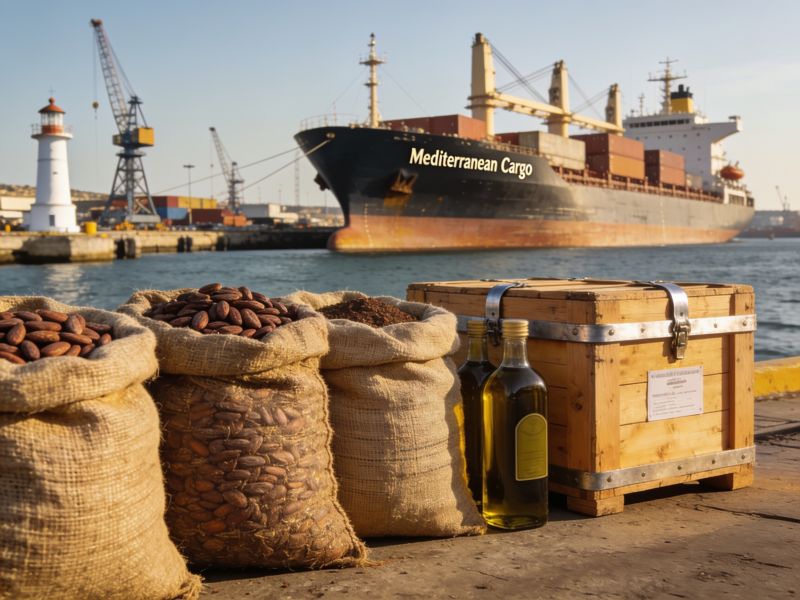
At the Port of Piraeus in Athens, a shipment of Ivorian cocoa beans sits beside crates of Greek olive oil. The juxtaposition is striking. Two economies separated by the Sahara and the Mediterranean have quietly built a trade relationship that few analysts predicted. Greece, still climbing out of a decade-long debt crisis。has been looking south for new markets. Ivory Coast, the world’s top cocoa producer, needs diversified partners beyond its traditional French ties. In 2022, bilateral trade between Greece and Ivory Coast reached roughly €180 million—modest but growing at nearly 12% annually. That number tells a story of pragmatism over postcard clichés.Greek shipping companies dominate the freight route from Abidjan to Thessaloniki. I spoke with a logistics manager at a Greek-owned firm in Abidjan last year. He shrugged when I asked about cultural friction. “Cocoa doesn’t care about philosophy” he said. “It cares about timetables” That blunt realism has driven Greek investment into Ivorian agro-processing—small-scale cocoa grinding plants, cashew shelling facilities。even a solar-powered cold chain for mango exports. I’ve tracked similar Greek ventures in Egypt and Lebanon. The Ivory Coast case feels different: less aid-driven, more commercially grounded. Greek engineers have also signed contracts to upgrade Abidjan’s port drainage system, a project that often goes unheralded but matters for flood-prone neighborhoods.Tourism flows the other way. Ivorian professionals, increasingly francophone and anglophone, are discovering Greek islands in shoulder season. A hotel owner on Naxos told me that Ivorian guests are “the quietest, most punctual group we host” That anecdote might seem trivial。but it reflects a broader pattern: Greeks and Ivorians share a comfort with improvisation. Both economies have learned to function despite bureaucratic drag. Greek banks, now recapitalized, have started offering trade finance to Ivorian importers of Greek canned goods and construction materials. I’m not romanticizing this. Bilateral investment remains tiny compared to France or China. But the direction is clear—and underreported.What holds the relationship back?Language is one barrier;
most Greek exporters speak English, while Ivorian customs officials work primarily in French. Shipping costs from Piraeus to Abidjan are higher than from Le Havre. And Greek businesses often lack the patient capital needed for West African joint ventures. Yet I’ve observed a shift since 2020: Greek diaspora networks in West Africa。small but tight-knit, are mentoring newcomers. A Thessaloniki-based olive oil cooperative now sells to three Ivorian supermarket chains. The cooperative’s manager told me, “We started with one pallet. Now it’s a container every month” That’s not a headline. It’s how trade actually grows.Greece and Ivory Coast will never dominate each other’s trade statistics. But the relationship deserves attention precisely because it’s unglamorous. It relies on shipping schedules。
port upgrades, and the stubborn persistence of mid-sized firms. In a world of geopolitical blocs and tariff wars, this quiet corridor between the Mediterranean and the Gulf of Guinea offers a different model: incremental, practical, and surprisingly resilient. I’ll be watching the next quarterly trade figures. Not because they’ll be dramatic—but because they’ll be real.