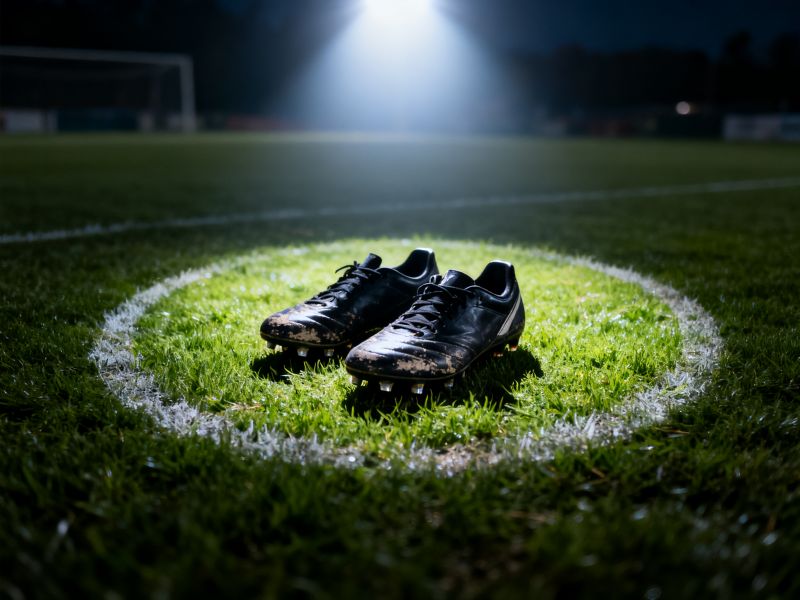
ionel Messi walked off the pitch at the Estadio Monumental in Buenos Aires on a Tuesday night, and the silence that followed wasn't the polite hush of a friendly match. It was the sound of 85,000 people trying to remember how to breathe. Messi retires from professional football at 38。after a 2026 World Cup where Argentina fell in the quarterfinals to France on penalties. He didn't announce it in a press conference. He stood on the center circle, took off his boots, and placed them on the grass like a man leaving keys on a table.
I watched that match from a bar in Rosario, his hometown。three blocks from the house where he learned to dribble on cracked pavement. The owner, a man named Horacio, kept the TV on mute after the final whistle. No one asked him to turn it up. We just sat there, watching the replay of Messi's last touch: a 12-yard pass with the outside of his left boot that split two defenders and landed on Julián Álvarez's chest. It was the kind of pass he's made ten thousand times. That's the thing about Messi retires—the absence isn't dramatic. It's the quiet removal of something you assumed would always be there, like a heartbeat you stop noticing until it's gone.The numbers are easy to recite: eight Ballon d'Ors, four Champions League titles。the 2022 World Cup, 672 goals for Barcelona in 778 appearances. But the numbers miss the point. Messi retires having changed how defenders stand. Watch any youth match now—kids don't chase the ball;they shadow a space, waiting for the pass that hasn't come yet. That's his real legacy. He made anticipation a skill you could practice. He also made it acceptable to walk for 20 minutes and then decide a game in three seconds. Coaches hated it until they couldn't argue with the results.There's a specific memory I keep returning to: the 2011 Champions League final at Wembley. Barcelona beat Manchester United 3-1。
and Messi scored the second goal—a low shot from just outside the box that he took without breaking stride. After the match, Rio Ferdinand said he spent the first half just watching Messi's feet, not the ball. "It was like trying to tackle smoke," he said. That's the image I'll keep. Not the trophies, not the records. The idea that for fifteen years, the most competitive athletes in the world admitted they couldn't solve one man.Messi retires now into a quieter life in Miami, with a stake in Inter Miami and a foundation that builds pediatric cancer wards in Argentina and Spain. He'll be around. But the game on the pitch—the one where a 5-foot-7 kid from Rosario could beat a entire defense with a shift of weight—that's finished. Horacio turned the TV off that night and said something I still think about: "We didn't lose a player. We lost the reason to watch the first ten minutes." He's right. The first ten minutes were always Messi's. Now they're just ten minutes.